
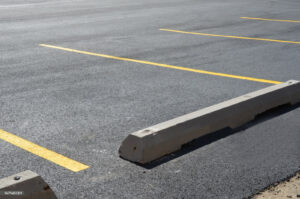
Owners and operators of off-street car parking spaces located in the Melbourne CBD and surrounding suburbs are liable to pay an annual congestion levy unless an exemption or concession applies.
This article provides an overview on the levy under the Congestion Levy Act 2005 (Vic) (CLA).
What is a leviable parking space?
Broadly, the levy applies to a car space used for business purposes within the prescribed area.
A parking space will attract the levy where it is a ‘parking space’ that is not an exempt parking space and is located within the ‘levy area’.
- A ‘parking space’, as defined in the CLA, is a space set aside or used for the parking of a motor vehicle, whether or not the space is used for the parking of a motor vehicle and whether or not the space is permanently delineated as such. This does not include street parking available to the public.
- There are two categories of ‘levy area’, see: https://www.sro.vic.gov.au/congestionlevymap. Broadly, category 1 is the CBD, and category 2 is the surrounding suburbs to the north and south of the CBD. In 2025, leviable parking spaces in category 1 will attract a $1,750 levy and those in category 2, a $1,240 levy.
The levy is indexed annually for CPI and is calculated by the SRO based on the car park usage from the previous calendar year.
What are the exemptions?
Some of the key exemptions from the levy include:
- A car park used for residential parking, eg, a car park used at a person’s home. However, a residential car park in the prescribed area that is leased to a commuter is subject to the levy.
- A car park used exclusively for visitors including clients, customers or consultants provided the premises are not the person’s usual place of business or work.
- A car park used for disabled persons or emergency vehicles.
A part year concession may apply where a parking space becomes an exempt parking space or is not capable of being used for a period/s of more than 30 days, eg, where the car park space is being set aside for building works.
Who is liable to pay the levy?
When someone becomes an owner of a car park or, the operator of a public car park, they must register for the levy within one month of settlement. It is a requirement to make an annual return in relation to each year ending 31 December declaring the number of non-exempt parking spaces they own or operate.
Where a parking space is leviable, the owner of a private car park, and the owner and operator (who are jointly and severally liable) of a public car park, are liable to pay the levy calculated as at January 1st of each assessment year.
If a private parking space attached to a property is being leased, whether or not the owner is liable to pay the levy depends on how the tenant is using the parking space. If the tenant is using the parking space under a lease or a car park licence agreement with the owner, the tenant will be liable to pay the levy amount to the owner. However, if the parking space is used by the tenant for an exempt purpose, the tenant must provide the owner with a completed exemption claim form.
The CLA authorises the car park owner to pass the cost of the levy on to whoever has the right to use the car park under a lease, licence or other arrangement even if there is no express provision in the lease or other relevant document.
Other considerations
There may be other factors that need to be considered in respect of the provision of car parking benefits including:
- Fringe benefits tax (FBT) – where the car park is provided in respect of an employment arrangement and there is no FBT exemption.
- Goods and services tax (GST) – where the levy is collected by a real estate agent and is passed on to a tenant where the landlord is registered for GST.
Conclusions
Understanding and managing the congestion levy requires a sound understanding of the legislation and guidance provided by the State Revenue Office.
Naturally, DBA Lawyers would be pleased to assist.
Related articles
- DBA Lawyers Tax Services
- Related Tax & Business Services
- VRLT — holiday home exemption extended to discretionary trusts and certain other structures
- The new commercial and industrial property tax that starts in Victoria on 1 July 2024
- Objecting against land tax in Victoria
* * *
This article is for general information only and should not be relied upon without first seeking advice from an appropriately qualified professional. The above does not constitute financial product advice. Financial product advice can only be obtained from a licenced financial adviser under the Corporations Act 2001 (Cth).
Note: DBA Lawyers presents regular SMSF Online Updates. For more details or to register, visit www.dbanetwork.com.au or call 03 9092 9400.
For more information regarding how DBA Lawyers can assist in your SMSF practice, visit www.dbalawyers.com.au.
By Daniel Butler, Director ([email protected]) and Nick Walker, Lawyer ([email protected]) DBA Lawyers.
DBA LAWYERS
3 December 2024
