
From 1 January 2026, significant changes to the vacant residential land tax (VRLT) will take effect. This article will cover both the legislative changes as well as updated revenue rulings and Treasury guidelines on the VRLT.
VRLT on unimproved land
Broadly, for VRLT to be imposed, land must satisfy the definition of ‘residential’ and ‘vacant’ as those terms are defined in the Land Tax Act 2005 (Vic) (LTA).
Broadly, prior to 1 January 2026, the definition of residential land in the LTA required there to be a house on the land. However, for the 2026 tax year, a new category of ‘residential’ land was added, colloquially referred to as the ‘unimproved land category’.
A tax year for present purposes is the year the owner receives a VRLT assessment which is be based on the prior calendar year’s use and occupation (U&O) of the land. Accordingly, when we discuss changes from the 2026 tax year, we refer to the U&O of the land for the 2025 calendar year.
If the criteria for the ‘unimproved land category’ are met, the land will be considered residential for VRLT purposes. Broadly, the criteria is as follows:
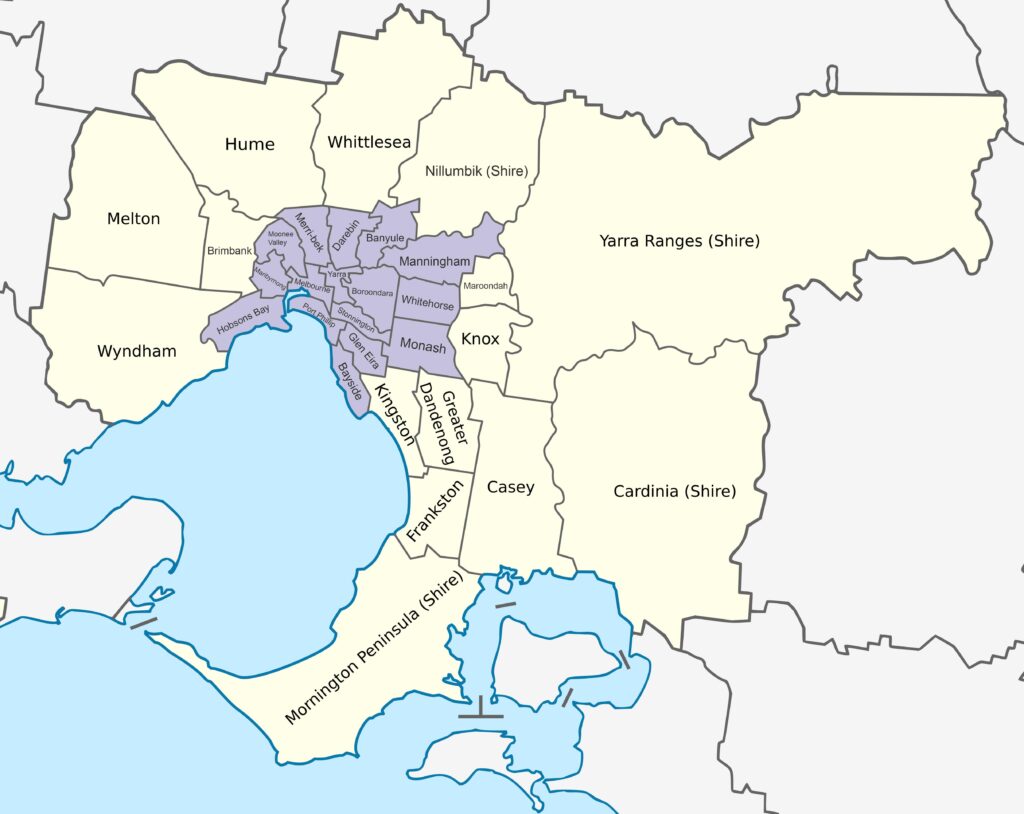
- The land is within Metropolitan Melbourne (refer to annexure A).
- The land is zoned (ie, through local council zoning) as being able to be used for residential purposes.
- The land is not being primarily used or under development for a commercial purpose.
- The land does not have a house on it. A house in this context includes a house that is under construction or uninhabitable.
Accordingly, this ‘unimproved land category’ typically covers land that could be developed for residential use but is currently just an empty lot, eg, land used for land-banking for future development or use.
For unimproved land to be considered ‘vacant’ and thus be subject to VRLT, the land would need to have remained ‘unimproved’ for a continuous period of 5 years. This 5-year period is retrospective. Accordingly, for owners of unimproved land at 1 January 2026, the nature of the use of the land dating back to 1 January 2021 is relevant.
However, unimproved land that is contiguous with the owner’s principal place of residence or their holiday home may not be covered by VRLT.
Victorian Treasurer’s guidelines — 17 November 2025
Land under the ‘unimproved land category’ on which construction of a residence has not commenced after five years will not be considered vacant if there is an acceptable reason for the construction having not been started.
On 17 November 2025, the Victorian Treasury released guidelines (Treasury Guidelines) outlining reasons the Commissioner must take into account when determining whether there is an acceptable reason why the construction was not commenced within 5 years.
In particular, the Treasury Guidelines provide that the land will only be considered not vacant in a tax year if an owner:
- is genuinely and actively working to commence construction on the land as soon as possible; and
- could not reasonably be expected to have commenced construction within five years in the circumstances.
In determining whether the owner ‘could not reasonably be expected to have commenced construction’, the Commissioner must have regard to the following factors:
- Whether there have been unforeseen restrictions to access the land or requirements to undertake extensive or further cultural heritage or archaeological analysis.
- Whether the unforeseen presence of endangered wildlife or flora has caused unexpected delays.
- Whether the land has been damaged or adversely impacted by extreme weather events.
- Whether the absence or lack of adequate infrastructure that is beyond the control of the owner or developer has delayed construction. For example, the absence of road infrastructure preventing access to the construction site.
- Whether prolonged or significant planning or building appeals or disputes in respect of the construction.
- Whether prolonged or significant delays in the regulatory approval or permit processes.
- Whether the availability of specific key expertise or personnel has delayed construction.
Further changes to the LTA
The State Taxation Further Amendment Act 2025 (Vic) (Amendment Act) was given Royal Assent and became law on 25 November 2025.
The Amendment Act made the following changes to the LTA from 1 January 2026:
- The deadline to notify the SRO of land that has not been U&O for more than 6 months has been extended from 15 January to 15 February each year.
- If, during the same calendar year, land starts off being residential land, temporarily ceases to be residential land but then before the end of the year, changes back to being residential land, the land is exempt from VRLT.
SRO ruling TAA-008v2
The State Revenue Office ruling TAA-008v2 (SRO’s Ruling) confirms the SRO’s view that if a notification default occurs in respect of VRLT, a penalty tax will be imposed as an additional tax.
A notification default occurs when residential land was not U&O for more than 6 months and the owner did not notify the Commissioner of the land’s vacancy status prior to 15 February.
Part 5 of the Taxation Administration Act 1997 (Vic) provides that the penalty tax is equal to 25% of the VRLT payable. Importantly, if a notification default occurs but no VRLT is payable, eg, the land was used as a holiday home, then there will be no penalty tax as well as no VRLT.
The SRO’s Ruling provides the following example:
Bethany owns a habitable residential property (Sunnyside) in the City of Yarra which was not occupied for at least 6 months during 2018. Sunnyside was a vacant residential property as at 31 December 2018, but Bethany does not notify the Commissioner of this.
In September 2019, the Commissioner becomes aware of the vacant residential land and issues a vacant residential land tax assessment to Bethany for the 2019 tax year imposing $10,000 in vacant residential land tax. The assessment also includes a penalty tax of $2,500, imposed at the rate of 25% on the additional amount of vacant residential land tax assessed because of the Vacant Residential Land Notification Default that occurred for the 2019 tax year.
If an owner of vacant residential land notifies the SRO in one tax year, the SRO will assume the status of that land will remain the same for subsequent years unless the circumstances change. For example, if the land was used and occupied as a holiday house and satisfies the holiday home exemption, then the owner will not need to notify the SRO for subsequent years provided the land continues to satisfy the holiday home exemption.
Naturally, if the nature of the U&O of the land changes, the owner will need to update the SRO.
Conclusions
Advisers and landowners need to be aware of the ever-changing landscape of VRLT. Importantly, owners of vacant residential land need to notify the SRO prior to 15 February otherwise they may become subject to the penalty tax. If there is any doubt as to whether you believe you may be subject to VRLT or the penalty tax, we recommend that timely advice be obtained in respect of your circumstances to determine your options. Naturally, DBA Lawyers would be pleased to assist.
Related articles:
- Webinar — Land Tax, VRLT and CIPT
- Vacant Residential Land Tax in Victoria soon to be extended
- Vacant residential land tax — Q&A from recent DBA webinar
- Victoria’s vacant residential land tax – holiday home exemption
- VRLT — holiday home exemption extended to discretionary trusts and certain other structures
- VRLT — when should you notify the SRO?
- VRLT — how much will you have to pay?
* * *
This article is for general information only and should not be relied upon without first seeking advice from an appropriately qualified professional. The above does not constitute financial product advice. Financial product advice can only be obtained from a licenced financial adviser under the Corporations Act 2001 (Cth).
Note: DBA Lawyers presents monthly online SMSF training. For more details or to register, visit www.dbanetwork.com.au or call 03 9092 9400.
For more information regarding how DBA Lawyers can assist in your SMSF practice, visit www.dbalawyers.com.au.
By Nick Walker, Lawyer ([email protected]) and Daniel Butler, Director ([email protected]).
27 January 2026
ANNEXURE A
The yellow and purple shaded areas make up Metropolitan Melbourne for the purposes of VRLT.